BIOELECTRIC TEXTILES · 02
EMS, NMES, and FES all use electrical signals to trigger muscle contractions, but they serve different purposes. EMS supports exercise in healthy muscles, NMES is used for rehabilitation and the prevention of muscle atrophy, and FES helps paralyzed muscles function during real movements such as walking. In practice, the three terms are often used loosely in the market, making it difficult to determine a product’s category from its name alone. When choosing a device, check the condition and purpose it was actually designed for, rather than relying only on the letters on the packaging.
Update date: August 2026
Why are EMS, NMES, and FES so easily confused?
When you search for "electric muscle stimulation device", EMS, NMES, and FES are all mixed together. All three use the same principle of ``contracting muscles with electrical signals,'' but they were originally developed in different fields for different purposes, and as the market expanded, the boundaries between the terms became blurred. First, let's summarize the whole picture in one table.
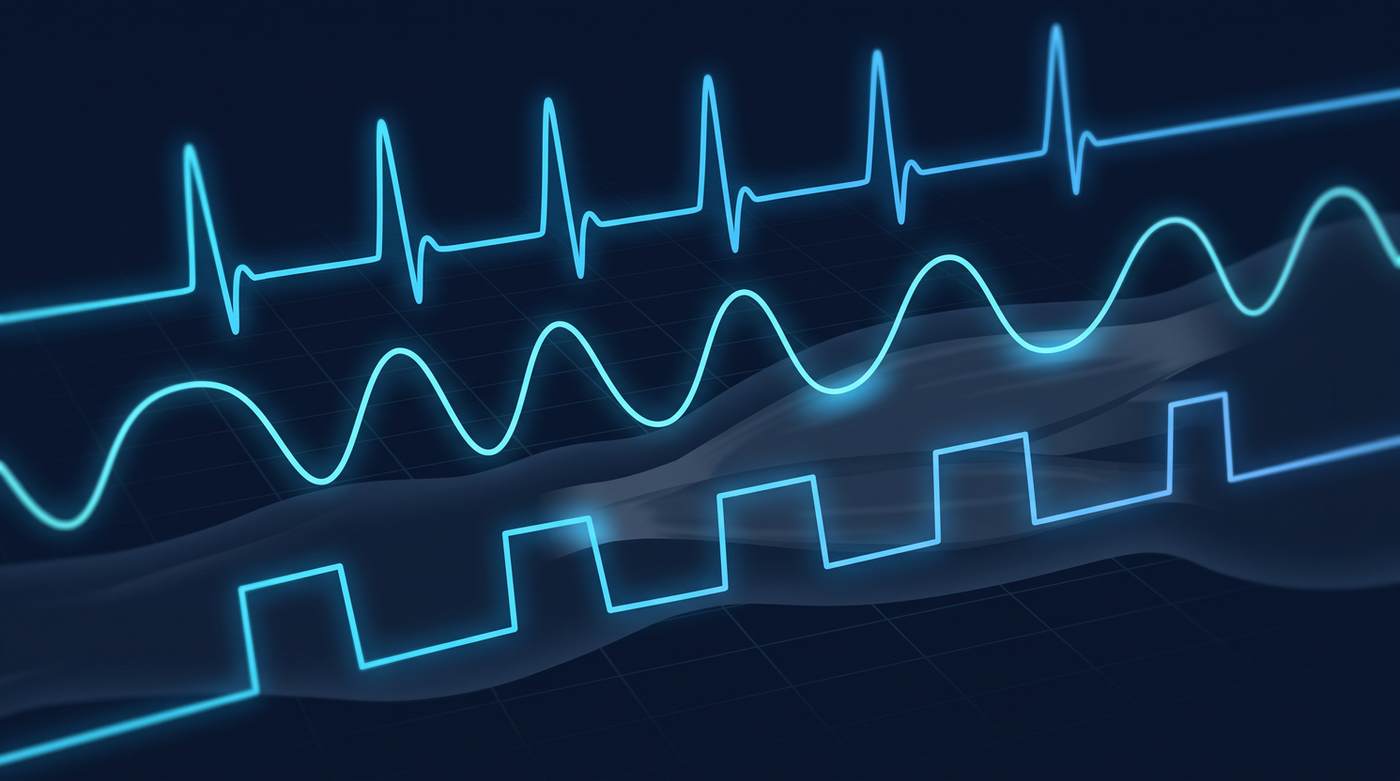
Even though their names overlap, EMS, NMES, and FES are each designed based on different waveforms and pulse patterns.
| classification | Main purpose | Mainly used place | Stimulation method |
|---|---|---|---|
| EMS | Strength training, exercise support | Home fitness, gym and wellness equipment | Contract muscles directly at rest |
| NMES | Rehabilitation, prevention of muscle atrophy | Hospital, physical therapy clinic | Stimulates neuromuscular pathways to encourage movement relearning |
| FES | Supports function of paralyzed muscles | Rehabilitation hospital, walking training | Synchronous stimulation timed to the actual movement |
What is EMS actually for?
EMS sends electrical signals directly to muscles to trigger contractions. Because it can activate muscle fibers that are difficult to recruit through voluntary exercise alone, it is often used to support strength training and muscular endurance. Many gym accessories and home fitness products fall into this category and are generally designed for healthy muscles rather than specific medical conditions.
What is NMES actually for?
NMES differs conceptually from EMS in that it targets not only the muscle itself but also the pathway from the nerves to the muscle. It is designed to support the relearning of movement patterns as well as muscle contraction. Widely used in hospitals and physical therapy, it is mainly applied in postoperative rehabilitation and to help prevent atrophy in muscles that have been inactive for long periods.
What is FES actually for?
FES precisely synchronizes electrical stimulation with the moment a functional movement should occur, such as taking a step while walking. It is used to help muscles affected by paralysis or nerve damage regain function during real movements and is often combined with gait training in rehabilitation hospitals. Of the three approaches, FES requires the most specialized supervision by healthcare professionals.
In the end, which one is right for you?
For general exercise support or muscle conditioning, a consumer EMS device is often sufficient. If you are recovering from surgery or are concerned about muscle atrophy, consider NMES under medical guidance. FES for functional recovery from paralysis, such as walking, should be managed by a specialized rehabilitation facility. All three use electricity to activate muscles independently of the brain’s voluntary signals. Using an intensity or method that does not match the intended purpose can therefore place unnecessary strain on the body.
Rehabilitation stimulation is typically performed with a healthcare professional directly observing the electrode position and strength.
Why are the representations of EMS and NMES so different?
This point is worth clarifying. Academically, EMS, NMES, and FES are distinguished by purpose and stimulation method, but in the market their boundaries overlap quite often. In particular, EMS and NMES are often labeled differently depending on the brand, even though they are functionally almost the same product. That's why it's much more important to check what condition and purpose the device was actually designed for than what's printed on the package.
What changes when this type of electrical stimulation is incorporated ``inside clothing''?
This type of electrical stimulation has traditionally been carried out through pads or belts attached to the body, but in recent years research has been progressing towards incorporating it directly into the skin-contact surfaces of clothing. Wave Company's conductive silicone material ElecSil™ is printed directly onto the fabric, and the printed area itself acts as an electrode. A soft sensor wearable design that can read body signals and transmit stimulation from the same contact surface without the need for separate disposable pads.
Rather than adding separate pads, the clothing itself becomes an electrode by printing conductive silicone on the inside surface of the fabric.
Wave Company has already applied conductive fabric technology based on ElecSil to its products such as WaveWear and TracMe. However, efforts to incorporate NMES or FES-level rehabilitation electrical stimulation into clothing itself, as discussed in this article, are currently still in the research and development stage, and are not actually available as products for sale. Please clearly distinguish between these two.
Frequently asked questions
Are EMS and NMES completely different technologies?
Conceptually, they handle different objects for different purposes, but in actual products, names are often used interchangeably, and the reality is that it is difficult to completely differentiate them by name alone.
Can I use home-use EMS equipment for rehabilitation?
The EMS equipment for home use is basically designed with healthy muscle exercise support in mind. For rehabilitation purposes, it is safer to receive NMES or FES under the supervision of a specialized facility.
How is electrical stimulation different from the movement signals produced by the brain itself?
Electrical stimulation causes muscle contraction directly through electrical signals, without the intervention of voluntary signals from the brain. Therefore, muscle fibers that are difficult to recruit during daily exercise may be activated.
FES What is it?
FES is designed for conditions such as paralysis that require specialist rehabilitation, so it is generally used under the supervision of healthcare professionals.
Does a clothing-type electrical stimulation device exist?
Yes. Technology that incorporates conductive silicone into fabric to transmit electrical signals without the use of separate pads is an area of active research and development, and ElecSil™ is an example of where this direction is heading.
For those who would like to learn more about technology that incorporates electrical stimulation into clothing
Learn more about ElecSil Request for samples/consultation on introduction
Related articles
This article is for general information purposes only and does not constitute medical advice.