BIOELECTRIC TEXTILES · 02
EMS, NMES, and FES are all similar in that they stimulate muscles with electrical signals, but their purposes are different. EMS is mainly used to assist in the exercise of healthy muscles, NMES is mainly used for rehabilitation and prevention of muscle atrophy, and FES is mainly used to help restore function of paralyzed muscles during actual movements such as walking. However, because the three terms are often used interchangeably in the market, it is difficult to completely distinguish them based on name alone. When choosing a device, it is safer to first check the purpose and physical condition for which it was designed rather than the name.
Updated: August 2026
EMS·NMES·FES, why is it so confusing?
If you search for “electrical stimulation exercise machine,” you will get three mixed words: EMS, NMES, and FES. All three have the same principle of moving muscles with electrical signals, but their original fields and purposes are different, so their labels are mixed and spread across the market. First, let’s start with the big picture and organize it in a table.
Although the names look similar, EMS, NMES, and FES are actually designed to have different electrical waveforms and pulse patterns.
| Category | main purpose | Mainly used places | stimulation method |
|---|---|---|---|
| EMS | Strengthening muscles, assisting exercise | Home training, health, beauty equipment | Isolated muscle contraction at rest |
| NMES | Rehabilitation, prevention of muscle atrophy | Hospital, physical therapy room | Stimulation of nerve-muscle pathways + muscle reeducation |
| FES | Assists in restoring function of paralyzed muscles | Rehabilitation hospital, walking training | Synchronized stimulation tailored to actual movement |
What is EMS a stimulus for?
EMS is a method that causes contraction by sending electrical signals directly to the muscles. When applying force voluntarily, it can stimulate muscle fibers that are not easily mobilized, so it is commonly used to assist in muscle strengthening or muscular endurance training. Most gym aids and home training products fall into this category and have a strong tendency to increase exercise effectiveness by targeting healthy muscles.
What is NMES a stimulus for?
NMES is conceptually distinct from EMS in that it stimulates the entire neuro-muscular pathway, not just the muscles. It focuses on causing contraction and helping the muscles relearn their movement patterns, so it is often used in hospitals and physical therapy settings for rehabilitation after surgery or to prevent atrophy of muscles weakened by prolonged immobility.
What is FES a stimulus for?
FES is a method of precisely synchronizing electrical stimulation to the moment when actual functional movement, such as walking, occurs. It is used to help muscles that have difficulty moving on their own due to paralysis or nerve damage recover their function within actual movements, and is often applied along with gait training in rehabilitation hospitals. Of the three, this is the area that requires the most professional management.
So which one should I use?
For general exercise assistance or strength management purposes, the EMS series consumer devices are often sufficient. If you are concerned about recovery or muscle atrophy after surgery, it is safer to approach NMES after consulting with a medical professional. If you are in a state of paralysis that requires actual functional recovery, such as walking, FES is an area that must be managed by a professional rehabilitation institution. Since all three techniques are based on the principle of using electrical signals to move muscles, if they are used at an intensity or method that is not suitable for the purpose of use, they can actually be a burden to the body.
Electrical stimulation for rehabilitation purposes is usually performed by medical staff directly checking the location and strength of the electrodes.
Why are the markings EMS and NMES mixed for each product?
There is something I need to be honest about here. EMS, NMES, and FES are academically distinguished based on purpose and stimulation method, but in the actual market, these boundaries overlap quite often. In particular, it is common for EMS and NMES to be written differently depending on the brand even for the same product. Therefore, it is much more important to check what physical condition and purpose the device was designed for rather than what alphabet is attached to the product name.
What changes when electrical stimulation enters clothes?
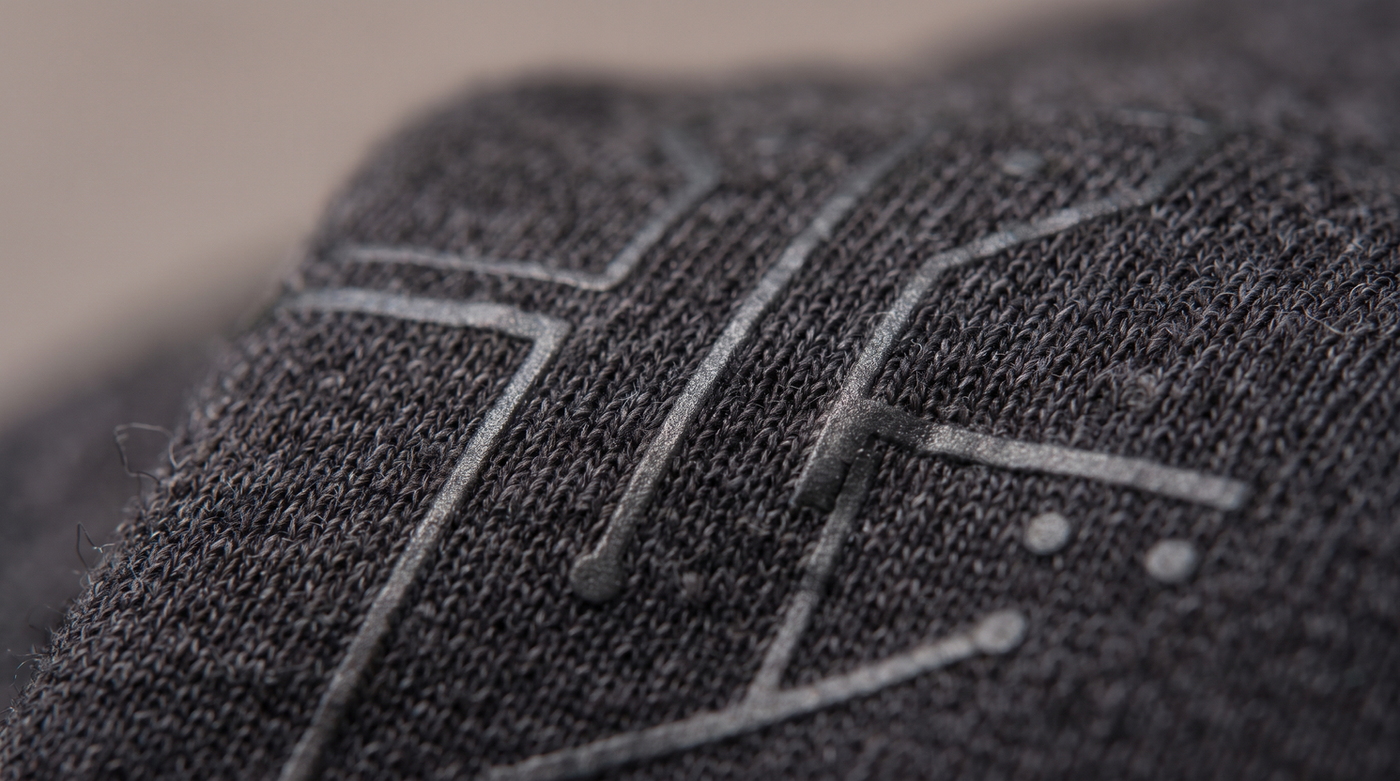
This type of electrical stimulation technology was originally applied to the body in the form of a pad or belt, but recently, it has also developed into adding a contact surface that transmits stimulation to the clothing itself. Wave Company's conductive silicone material ElecSil™ is designed to become an electrode by printing it on fabric and to act as a contact layer that reads body signals or transmits electrical stimulation.
Even without attaching a separate pad, conductive silicone is printed directly on the inside of the fabric, making the fabric itself an electrode.
Wave Company is already applying ElecSil-based fabric-type electrode technology to its own products such as Wavewear (WaveWear) and Track Me (TracMe). However, implementing the NMES·FES level of electrical stimulation for rehabilitation and functional recovery discussed in this article in the form of clothing is still being explored in the research and development stage and needs to be viewed separately from currently commercialized products.
Frequently Asked Questions
Are EMS and NMES completely different technologies?
I want to see you, I want to see you, I need you I want to know what I want to know.
EMS EMS Sorry?
EMS EMS EMS NMES·FES NMES FES FES
How do electrical impulses differ from brain movement commands?
Electrical stimulation is a method of directly contracting muscles using electrical signals without going through voluntary signals from the brain, so it can recruit muscle fibers that are not often used during regular exercise.
Can anyone use FES?
FES is designed for conditions that require specialized rehabilitation, such as paralysis, and is generally used under the supervision of medical staff.
Are there any electrical stimulation devices in the form of clothes?
There is. Methods of transmitting electrical signals without a pad by integrating conductive silicone into fabric are being researched and developed, and ElecSil™ is an example.
Are you curious about the technology that incorporates the principle of electrical stimulation into clothes?
View ElecSil Sample inquiry/consultation application
See also
This article is for general information purposes only and does not constitute medical advice.
The heart, muscles, and nerves also move with electricity. We summarize why electrical stimulation is receiving attention again amid the biohacking and longevity craze, and the story of conductive fabric, the next frontier, and ElecSil™.
Why do ‘fast muscles’ decrease first as we age? We summarize the direction of electrical stimulation research surrounding muscle loss, Dynamic FES, and the slow aging technology prepared by Wave Company.