BIOELECTRIC TEXTILES · 05
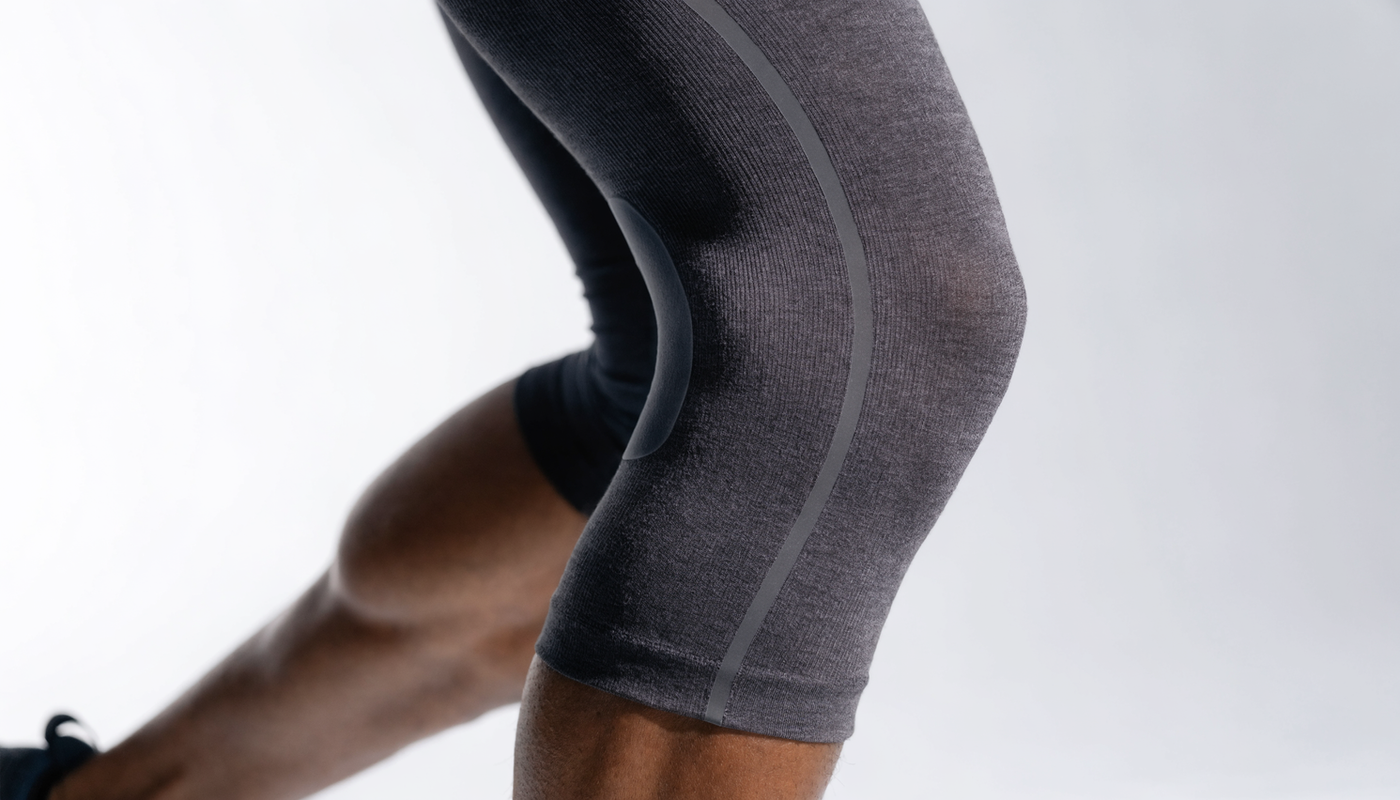
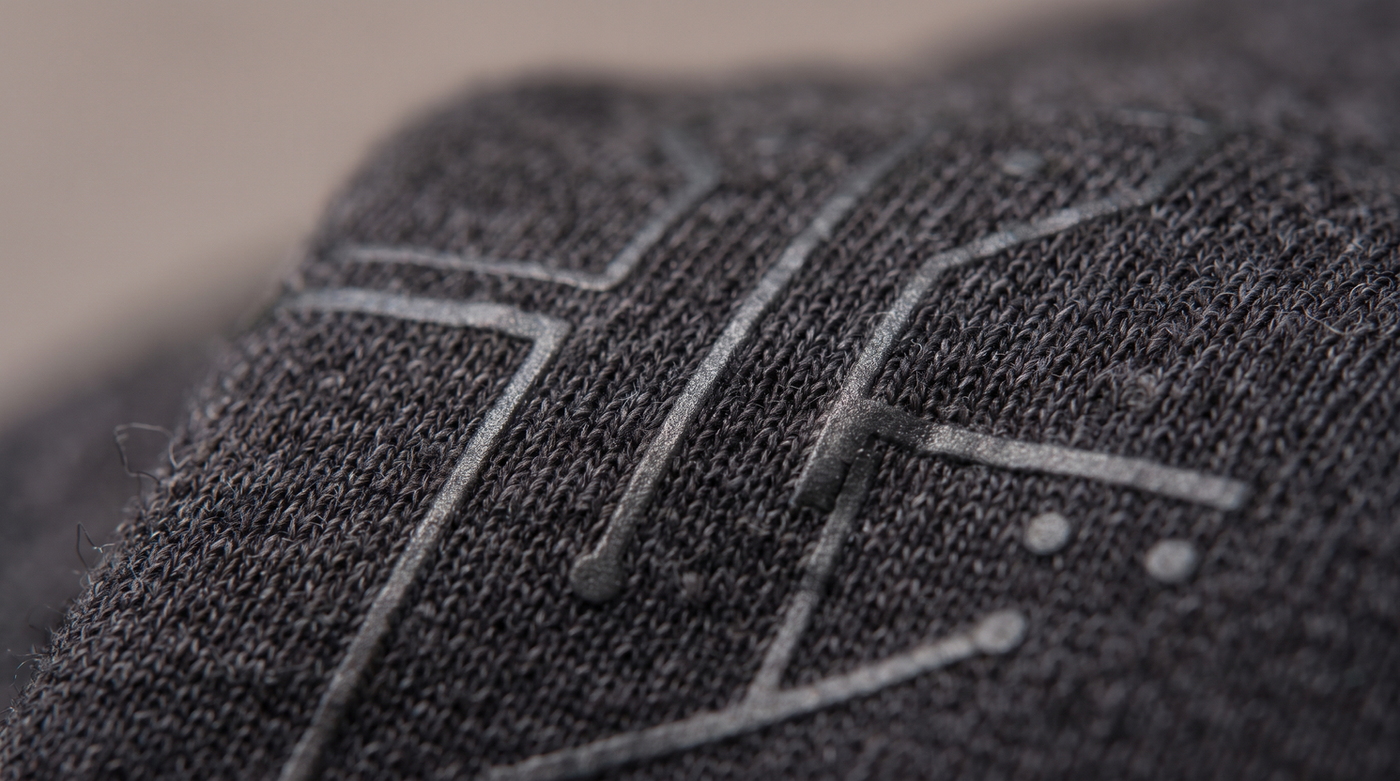
Wave Company's conductive silicone material ElecSil™ makes the fabric itself an electrode and wiring, enabling electrical stimulation to be implemented in the form of clothing without gel electrodes or separate pads. Since it is a method of printing directly on fabric, it is advantageous for mass production, and a hardware SDK is provided, making it easy for manufacturers in the healthcare, medical device, and robot fields to apply it to their products. ElecSil is not a product tied to one specific stimulation method, but is a base material that changes the medium that delivers multiple methods such as EMS, NMES, FES, and TENS, and its application range can be expanded from rehabilitation to sports, pain care, and biosignal monitoring. However, the commercialization stage is different for each field, and Wavewear and TrackMe are currently proven as consumer products.
Stimulating muscles and nerves with electricity is not a new technology. It has been used for a long time in hospital rehabilitation rooms and physical therapy rooms, and is also familiar as a home pain relief device. However, electrical stimulation still has not become an everyday item. The stumbling block was not the method of stimulation itself, but the form in which it was delivered to the body.
Why hasn't electrical stimulation entered our daily lives yet?
Sticky gel electrodes dry out over time, can irritate the skin, and require placement and removal every time. If a bundle of wires and a hard stimulator are added to this, it becomes a burden on users who must use it consistently for 20 minutes a day.
Therefore, the problem often pointed out with electrical stimulation is sustainability rather than effectiveness. The more cumbersome the preparation process, the easier it is to break the routine. Without changing the wearing experience, no matter how well-designed the stimulation protocol is, it is difficult to carry over in real life.
What changes when fabric becomes an electrode?
ElecSil™ is a conductive silicone that has been redesigned at this point at the material level. When conductive silicone is printed directly on fabric, the fabric soon becomes a soft electrode and sensor. It is a structure in which the fabric transmits electrical stimulation and acts as a medium to read biological signals without the need for additional metal electrodes or wiring. It's elastic so it follows the body's movements, and can be made lightly without seams, so you can get ready just by putting it on.
It also makes sense from a manufacturing perspective. According to Wave Company, as the printing process itself has become simpler, mass production is possible with significantly reduced costs compared to existing electrode and sensor methods. With the addition of a hardware SDK, even software and healthcare companies that do not have significant hardware capabilities can apply this material to their products with relative ease. Wave Company first verified the potential of the material with its consumer products such as Wavewear and Track Me, and based on this, it is expanding into B2B supply in the healthcare, medical device, and robotics fields.
To what extent can one material be used?
Electrical stimulation is divided into several methods depending on the purpose, including EMS, NMES, FES, TENS, IFC, HVGC, and WB-EMS. ElecSil is not a product that embodies one specific method, but a material that transforms a medium that conveys multiple methods into clothing. So the applicable fields are not tied to one place.
1. Rehabilitation and physical therapy
NMES and FES are methods used in rehabilitation settings to slow muscle atrophy, restore function of paralyzed muscles, and help with walking rehabilitation. If electrodes are integrated into clothing, it can be expanded to allow patients to continue their rehabilitation routine just by putting them on, without having to attach and remove pads every time.
2. Senior/slow aging care
Muscle loss, the loss of muscle mass as we age, is an important topic in the health of the elderly. Electrical stimulation in the form of clothing has the potential to be applied in a way that allows muscle stimulation routines to continue in everyday spaces other than hospitals.
3. Sports training and recovery
EMS and WB-EMS are used for muscle strengthening or full body stimulation training. Like WB-EMS training, which is performed briefly while wearing a full-body suit, the exercise suit itself can be expanded to serve as a stimulator without any additional equipment.
4. Pain/home care
TENS and IFC are stimulation methods that are widely used at home to relieve pain or improve blood flow. If implemented in the form of clothing or a band rather than a patch or pad, it can be expanded into a home care product that can be used comfortably in everyday life.
5. Medical device/vital signal monitoring
ElecSil is a material that can be used as a sensor that reads not only stimulation but also biological signals such as EMG and ECG. The ability to implement stimulation and monitoring together in one fabric provides a new design option for medical device manufacturers.
6. Robots, exoskeletons, industrial wearables
Robots are one of the areas that Wave Company has identified as a target for B2B supply. In devices that must exchange signals in close contact with the body, such as exoskeletons or industrial and military wearables, using fabric-type electrodes instead of hard sensors allows for new designs in terms of wearability and durability.
7. Digital health data
Biosignals read from materials are accumulated as data, and that data leads to AI-based insights. When electrical stimulation and bio-signal monitoring are combined, it can be expanded into a digital health product that provides stimulation and simultaneously records the body's response.
What if you look at the application field in one page?
| field | It's a good idea | expected utility |
|---|---|---|
| Rehabilitation/Physical Therapy | NMES, FES | Delays muscle atrophy, continues walking and muscle function rehabilitation routine in the form of daily clothes |
| Senior/slow aging care | NMES, EMS | Make muscle stimulation a habit in everyday spaces outside the hospital |
| Sports training and recovery | EMS, WB-EMS | Supports training and recovery with sportswear itself, without separate equipment |
| Pain/Home Care | TENS, IFC | Maintain daily pain relief and blood flow improvement routine without pads |
| Medical device/vital signal monitoring | EMG, ECG sensing | Simultaneous stimulation and monitoring in one fabric |
| Robots, exoskeletons, industrial wearables | Stimulation + Sensing Combination | Connects the body and devices with a highly wearable fabric interface |
| digital health data | Stimulation + Sensing Combination | Accumulate stimulus response data and connect to AI insights |
How should we distinguish between what is possible now and what is possible in the future?
Not all of the seven areas introduced here are complete products. Wavewear and Track Me are currently sold in the consumer market and have proven materials, and the remaining areas are either applicable due to the characteristics of the materials or are being expanded with partners. It is necessary to clearly distinguish between the differences in completeness and commercialization stage for each field.
ElecSil is not a finished product made for a specific disease or one exercise purpose, but is closer to a base material that implements electrical stimulation and bio-signal sensing in the form of clothing. By using AlignX™, an adhesive material, and TracSil™, a motion sensor, you can design a combination that encompasses attachment, stimulation, and motion detection.
Frequently Asked Questions
What is the difference between ElecSil and the existing EMS pad or gel electrode?
Gel electrodes are consumables that can be attached and removed as patches, and may dry out or irritate the skin over time. ElecSil prints conductive silicone directly onto the fabric so that the electrode itself becomes part of the clothing, so it can be designed in a way that stimulation is transmitted just by wearing it without a separate attachment process.
Can I only supply ElecSil materials through B2B?
Yes. After verifying the material with its consumer products, Wave Company is expanding its B2B supply to the healthcare, medical device, and robotics fields, and also provides hardware SDK to help manufacturers easily apply it to their products.
Are all the applications introduced commercially available products?
No. Rehabilitation, sports, pain care, etc. are areas where application is possible or are being expanded due to the nature of the material, and the level of completeness and commercialization varies depending on the field. Currently being sold as consumer products are WaveWear and TrackMe.
Can ElecSil read not only electrical stimulation but also biological signals?
Yes. ElecSil is designed to deliver electrical stimulation and can also be used as a sensor to read biological signals such as EMG and ECG, so it can be used to implement stimulation and monitoring together.
How is it different from AlignX™ and TracSil™?
AlignX™ is an adhesive silicone-based kinesiology taping material, and TracSil™ is a strain sensor material that detects movement. While ElecSil is responsible for stimulation and biosignals, these two are responsible for attachment and movement detection, respectively, and complement each other when used together.
Are you curious about technology that implements electrical stimulation through clothing?
View ElecSil Sample inquiry/consultation application
Related article
This article is for general information purposes only and does not constitute medical advice.
The heart, muscles, and nerves also move with electricity. We summarize why electrical stimulation is receiving attention again amid the biohacking and longevity craze, and the story of conductive fabric, the next frontier, and ElecSil™.
Why do ‘fast muscles’ decrease first as we age? We summarize the direction of electrical stimulation research surrounding muscle loss, Dynamic FES, and the slow aging technology prepared by Wave Company.