BIOELECTRIC TEXTILES · 04
Heartbeats, muscle contractions, and nerve signals all operate on electrical signals. This is not a hypothesis, but established science that has been used clinically for over 100 years. Recently, with the spread of biohacking and longevity (longevity) culture, approaches to managing the body with electricity, such as EMS, vagus nerve stimulation, and wearable vital monitoring, are receiving attention again. However, until now, electrical stimulation was far from everyday life as it was tied to large devices, gel pads, and bundles of wires, and Wave Company is looking to capture this electricity in the form of clothing with conductive silicone ElecSil™.
Even as you read this sentence, your heart is beating with electrical impulses. The muscles that move the eyes contract with electrical signals, and the neurons in the brain that understand this sentence send and receive electrical signals. It may sound unfamiliar, but it is not science fiction, but a story from the first chapter of a physiology textbook. It's easy to think of the body as just an area of chemistry and metabolism, but the signal that actually makes the body work is electricity.
To what extent is it true that the body runs on electricity?
Nerve cells and muscle cells create electrical signals called action potentials through the movement of ions across the cell membrane. These signals transmit information from the brain to the fingertips and cause the heart muscle to contract in a steady rhythm.
In hospitals, the electrocardiogram (ECG), which measures the heart, and the electromyogram (EMG), which measures the condition of muscles, are both devices that read electricity in the body. This is not a trend, but a long-established science.
Orthopedic surgeon Robert O. Becker's book The Body Electric (1985) is often cited as a classic that made this fact known to the public. The idea of the body moving with electricity is by no means new.
Why couldn't electrotherapy be used outside the hospital?
Methods of stimulating the body with electricity have been used in hospitals and rehabilitation settings for a long time. A typical scene is the electrical stimulation received with pads applied in the rehabilitation room after ankle surgery.
I want to know, I want to see you. Sorry, I don't know what you're talking about. I can't wait to see it, I can't wait to see it, I can't get enough of it.
Why is electricity receiving attention again now?
In recent years, books dealing with biohacking and longevity have filled bestseller lists, especially in the United States, becoming a part of the culture. Books that deal with body optimization, such as Ben Greenfield's Boundless and Peter Attia's Outlive, are representative examples.
In this trend, methods that utilize electricity, such as EMS training, vagus nerve stimulation, and wearable vital monitoring, are receiving attention again. However, not all effects of each method have been scientifically confirmed. A more accurate explanation is that attempts to manage one's condition by intervening in the body's electrical essence have emerged as a distinct trend.
The table below summarizes the approaches mixed in the term “maintaining the body with electricity.” Even though they are grouped under the same term, electrical stimulation, the degree to which they are scientifically established is different.
| approach | How to deal with electricity in your body | Current location |
|---|---|---|
| ECG/EMG measurement | Reads electrical signals produced by the body | Established standards in the medical field |
| NMES·EMS | Electricity is passed through muscles to cause contraction. | It has been used in rehabilitation for a long time, and research is underway on its training effects for the general public. |
| Dynamic FES | Match the stimulus to the moment the actual action occurs | Although at a research stage, most often associated with muscle strength indicators |
| vagus nerve stimulation | Electrically intervenes in the autonomic nervous system | Approved as a medical device for some indications; wellness use is at the stage of accumulating evidence |
| Wearable Vital Monitoring | Continuously records bioelectrical signals in daily life | Widespread as a consumer product, interpretation accuracy varies by product |
| conductive fabric | The clothes themselves become electrodes that read and transmit | Materials are commercialized, electrical stimulation application is in development stage |
Why is the next frontier electric?
When the body originally runs on electricity and people begin to take interest in electrical stimulation again, the next question naturally follows. In what form will this electricity be brought close to the body?
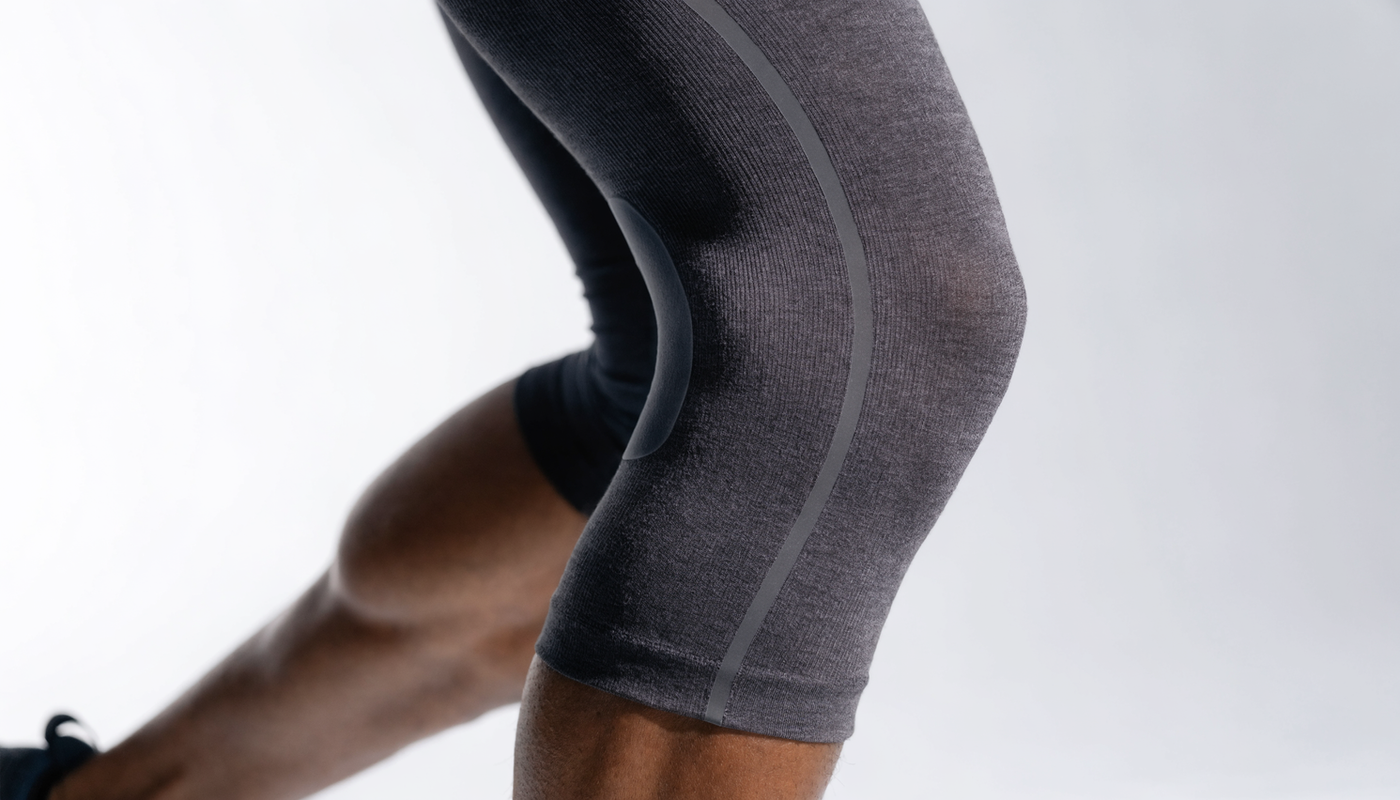
The answer is surprisingly simple. The goal is to make hospital devices and gel pads as natural as the clothes you wear every day. For example, if the electrodes are already inside the sportswear, the step of finding and attaching the pads is eliminated. If you can start the morning like getting dressed, electrical stimulation can be moved toward a daily habit rather than a special treatment.
What is Wave Company doing here?
Wave Company is a smart textile company with a mission to slow aging through exercise. CES Received Innovation Award in Digital Health in 2024.
There are two consumer products available right now. Wavewear is a sportswear brand that combines kinesiology taping and compression, and Track Me (TracMe) is sold to general consumers as a smart exercise solution that combines a protector that measures movement and an AI fitness app.
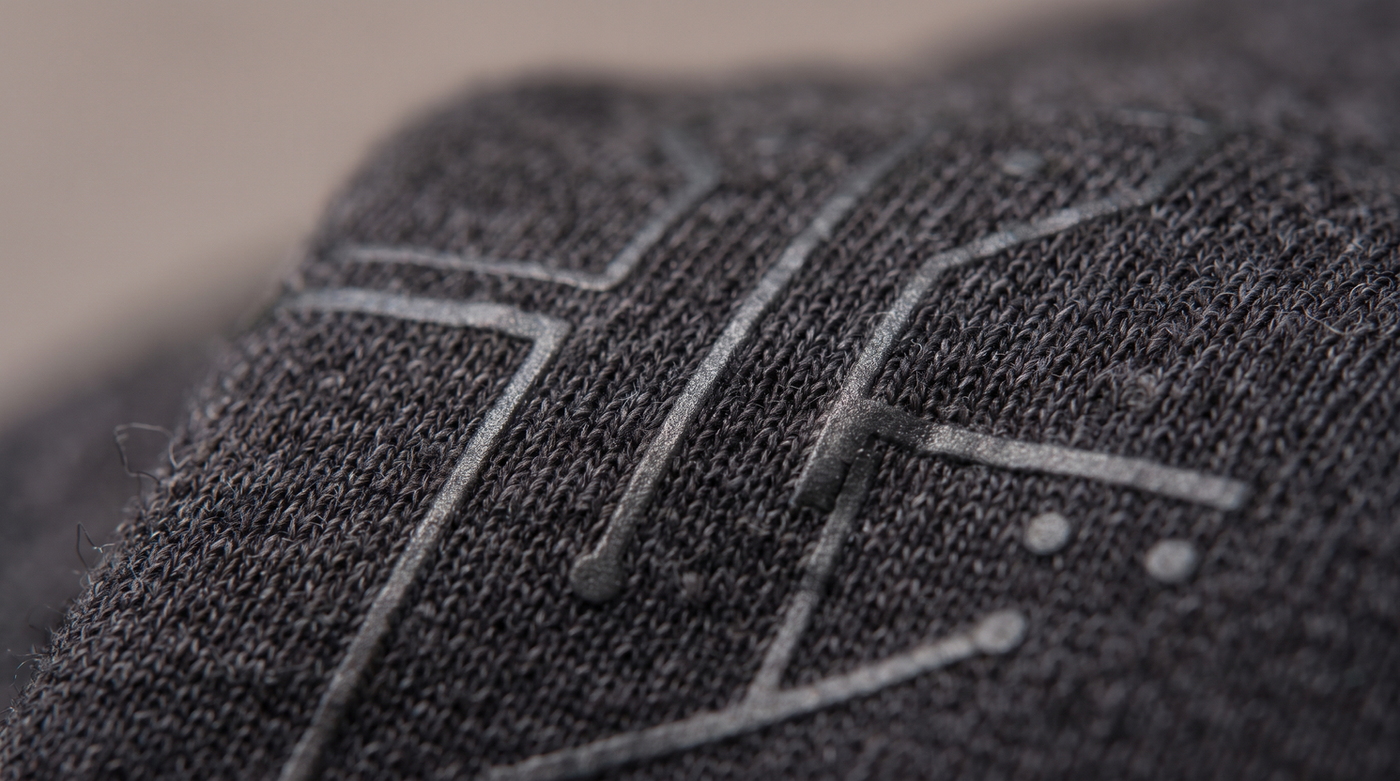
ElecSil™ is a material technology that goes one step further. If conductive silicone is printed directly on fabric, the area can soon become a biological electrode and wiring, allowing clothes to read the body's electrical signals or become a passage for transmitting electrical stimulation. There is no need for gel pads or bundles of wires, and since the fabric itself is an electrode, it is seamless and lightweight. According to our estimates, mass production is possible at a significantly lower cost than existing sensor methods.
However, finished products containing electrical stimulation functions are still in the development stage. Wavewear and TrackMe are commercialized and sold, and ElecSil™ is supplied as a material and technology collaboration unit. Building a bridge between the old science of the body being electric and the latest trends of biohacking and longevity is what Wave Company creates, and it is the material for that bridge.
Frequently Asked Questions
Is electrical stimulation actually effective?
It is established science that muscle contractions and nerve signals run on electricity. On the other hand, the effects of specific methods such as EMS or vagus nerve stimulation are still under research. Since the reported results vary depending on the purpose and application method, it is more accurate to divide them by field rather than grouping them into a single conclusion.
What is ElecSil™?
This is a conductive silicon material developed by Wave Company. This is a technology that makes the clothes themselves into bioelectrodes and wiring by printing directly on the fabric, and is supplied as a material unit, not as a finished product.
How is conductive fabric different from traditional methods?
The fabric acts as an electrode without a gel pad or separate wire. So the biggest difference is that it has fewer seams, is lighter, and can be designed for washing and daily wear.
What exactly is biohacking?
It refers to a cultural trend that seeks to self-observe and adjust one's body and health status using daily habits, exercise, and measurement technology. It is a concept that is more of a lifestyle rather than a medically defined category of treatment.
What kind of company is Wave Company?
A smart textile company with a mission to slow aging through exercise, it won the CES 2024 Digital Health Innovation Award. We sell Wavewear and Track Me as consumer products, and supply ElecSil™ and TracSil™ as materials and technologies.
Related article
Handling the electricity that moves the body in a wearable way is the direction Wave Company is looking at. Check out more of our ElecSil™ material and our products at wavecompany.net, and if you are considering application, please contact us through our inquiry page.
This article is for general information purposes only and does not constitute medical advice. Please consult a professional to determine your health status.
Why do ‘fast muscles’ decrease first as we age? We summarize the direction of electrical stimulation research surrounding muscle loss, Dynamic FES, and the slow aging technology prepared by Wave Company.