BIOELECTRIC TEXTILES · 03
Sarcopenia is a phenomenon in which both muscle mass and strength decrease with age, and it is reported that 'fast muscles' (type II muscle fibers), which are responsible for agility, tend to thin first. The reason electrical stimulation is constantly mentioned in this topic is because it is known to be able to bypass the brain's voluntary command pathway and cause muscle fibers that are not easily recruited through regular exercise to participate in contraction. In a systematic literature review that compiled and analyzed several randomized controlled studies, it was concluded that the method of providing stimulation during actual exercise movements (Dynamic FES) was more often associated with improvement in muscle strength index than the method of only providing stimulation in a still state. Wave Company is developing TracMe and ElecSil™ technologies with the mission of ‘slow aging through exercise’.
The statement that getting up from a chair has become more difficult than before is often summarized as ‘I have lost energy.’ However, much of the change occurs in the muscles, and more precisely, which muscles shrink first changes the way you feel about life. This article first summarizes the patterns of muscle change that occur with age and examines the direction in which electrical stimulation research is pointing so far.
Why isn’t muscle loss just a sign of aging?
Muscle loss refers to a phenomenon in which both muscle mass and strength decrease with age. What is important is change in life rather than numbers. Losing muscle can make you walk slower, make it harder to balance, and increase your risk of falling. Movements that are repeated every day, such as getting up from a chair or climbing stairs, become burdensome first.
Therefore, rather than seeing muscle loss solely as a result of aging, it is often treated as an indicator of how long a person can maintain an independent life.
Why do ‘fast muscles’ shrink first?
Muscle fibers are broadly divided into two types. There are slow muscles (type I), which produce long-lasting strength, and fast muscles (type II), which are short and produce strong strength. It is reported that with age, the fast muscles tend to thin out first and relatively quickly.
Fast twitch muscles are involved in quickness and posture recovery. This is where the power to straighten your body comes from when your foot gets caught in a snag while walking. If your fast-twitch muscles are reduced, your ability to react to dangerous moments may decline before your muscle mass. This is why this section is mentioned together when talking about the risk of falling.
Why does electrical stimulation keep coming up in this topic?
What makes electrical stimulation interesting is that it can skip the muscle fiber recruitment sequence. When exerting force on your own, the body recruits muscle fibers sequentially, starting with the muscle fibers that produce the smallest force, and the fast twitch muscles join relatively late, at the moment when strong force is needed. As you get older and find it difficult to perform vigorous movements, the opportunity to recruit your fast twitch muscles decreases.
It is known that electrical stimulation can change this order, bypassing the central nervous pathways. This means that there is room for muscle fibers that are not commonly used through voluntary exercise alone to participate in contraction. However, principles do not guarantee results. Actual reported results vary depending on ‘how stimulation is applied.’
Which method does the research say is better?
A systematic review that pooled and analyzed several randomized controlled trials addresses this question. This review synthesized data from 12 randomized controlled trials with 455 participants, nine of which reported significant improvements in muscle strength parameters. The trend that stood out was not the intensity of the stimulation, but ‘when’ the stimulation was given. Methods that provide stimulation during actual exercise movements are more often associated with good results than methods that only provide stimulation in a still state.
The table below summarizes the main methods used in the study. Trends shown in the table are limited to those reported in the cited review, and individual results may vary depending on health status and exercise history.
| way | How to stimulate | Trends reported in studies |
|---|---|---|
| Dynamic FES (dynamic functional electrical stimulation) | Synchronize stimulation to actual movements such as sitting and standing | Most often associated with improvements in strength indices |
| NMES + resistance exercise in parallel | Electrical stimulation and strength training performed together | Good results have been reported in several studies |
| Static NMES (Static neuromuscular electrical stimulation) | Transmit only stimulation without movement | Reported meaningful changes in participants with limited mobility |
| WB-EMS (Full body EMS suit) | Repeat short sessions with full body suit | Considered as an alternative with less burden on joints |
| TENS | Nerve stimulation for pain relief | The effect of increasing muscle mass has not been confirmed. |
What explains why Dynamic FES is ahead?
The review is accompanied by several comments. The first is the mobilization sequence described earlier. Stimulation can bring out fast-twitch muscles that have little participation through voluntary contraction alone. Second is context. If you match the stimulation to movements you actually use in your daily life, such as getting up from a chair, there is a greater chance that the skills you trained will remain the same. Third, there are also reports of greater increases in blood flow and oxygen consumption when movement and stimulation occur together.
These explanations are not mutually exclusive, and research is still evolving. Rather than drawing a single conclusion, a suitable summary of the current evidence is that 'the timing of stimulation seems to be more important than the intensity of stimulation.'
What is Wave Company doing in this trend?
Wave Company is a smart textile company with a mission of ‘slow aging through exercise’. CES Received Digital Health Innovation Award in 2024.
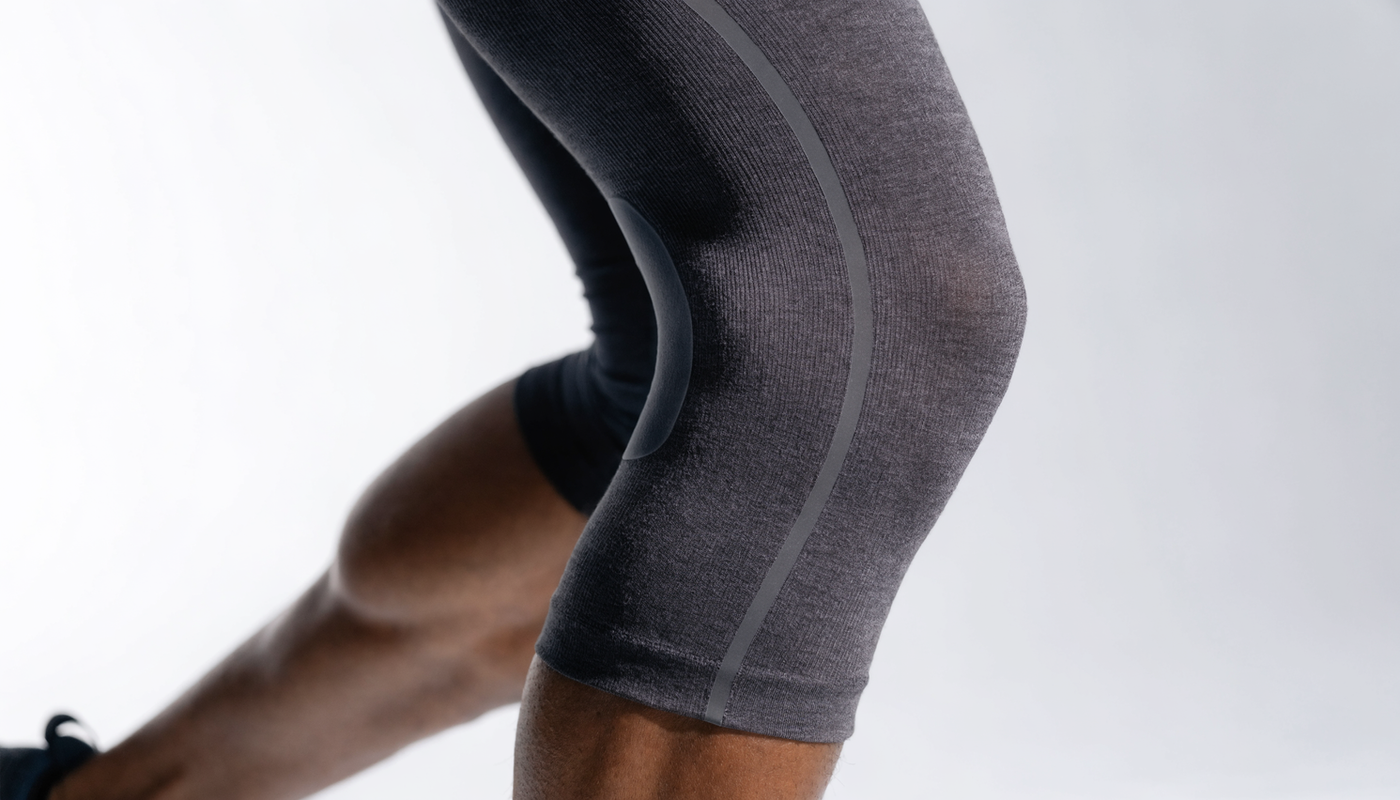
There are two consumer products available right now. Wavewear is a sportswear brand that combines kinesiology taping and compression, and TracMe is an AI fitness solution that records the number and balance of in-place exercises such as squats and planks by embedding TracSil™, a motion-detecting sensor, into the protector and recommends the next exercise using accumulated data. The focus is on getting people to consistently do 15 minutes of bodyweight exercise a day.
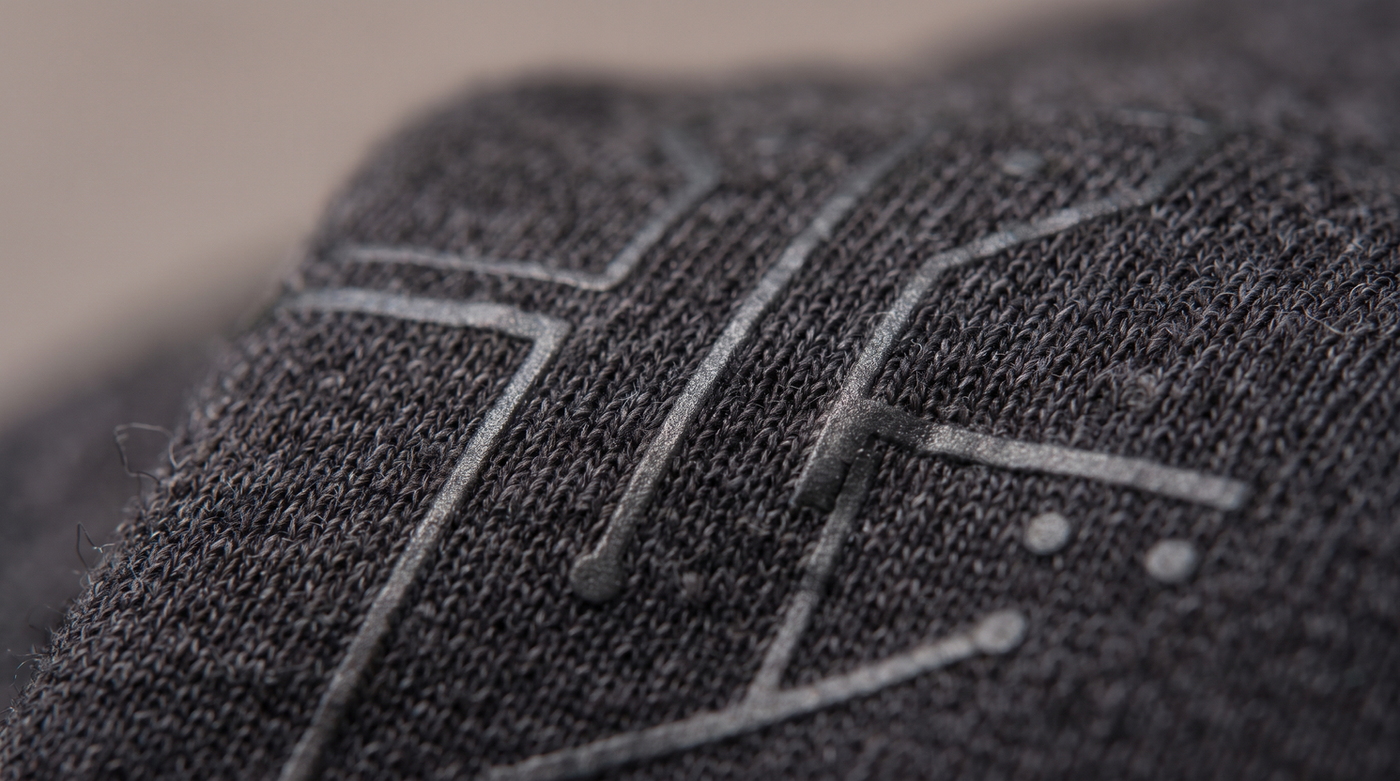
ElecSil™ is a material technology that goes one step further. By printing conductive silicone directly on the fabric, the clothes themselves become electrodes and wiring, allowing the body to read signals and transmit electrical signals at the same time. Like the Dynamic FES discussed in this article, it is difficult to repeat the method of 'coordinating movement and stimulation' in daily life by attaching pads and wires each time. When clothes become electrodes, the repetition becomes much easier.
However, this application is a possibility opened up by the material, and products with electrical stimulation functions are still in the development stage. Wavewear and TrackMe are commercialized and sold, and the application of electrical stimulation is being prepared for the next step.
Frequently Asked Questions
At what age should we start worrying about muscle loss?
It is known that muscle mass loss usually begins slowly in the late 30s and tends to accelerate after middle age. However, because individual differences are large, it is more practical to look at signs of change, such as walking speed, the feeling of climbing stairs, or the movement of getting up from a chair, rather than a specific age.
Can electrical stimulation replace strength training?
Research to date shows a tendency to do better in parallel than in replacement. It is better to understand it as a way to support exercise rather than a means to reduce exercise.
What is the difference between Dynamic FES and regular EMS?
The biggest difference is synchronization with movement. Dynamic FES matches the stimulus at the moment the actual movement occurs, while static NMES or regular EMS only delivers stimulation without movement.
Will TracMe or ElecSil solve muscle loss?
No. TracMe is a solution that deals with exercise habits and movement data, and ElecSil™ is a material technology for measuring bio-signals and transmitting electrical stimulation. It does not claim to be effective for specific diseases.
Is it okay for seniors to use electrical stimulation?
The methods used in research vary in intensity and application area, and their suitability varies depending on the individual's health condition, such as heart disease or sensory abnormalities. We recommend that you consult a professional before starting.
Related article
If you are curious about slow aging through exercise and the direction Wave Company is taking, check out wavecompany.net for more information. If you are a company considering bio-signal sensing or wearable electrical stimulation for your products, please contact us through the inquiry page.
This article is for general information purposes only and does not constitute medical advice. Please consult a professional to determine your health status.
The heart, muscles, and nerves also move with electricity. We summarize why electrical stimulation is receiving attention again amid the biohacking and longevity craze, and the story of conductive fabric, the next frontier, and ElecSil™.